
Xplode69
-
Posts
13 -
Joined
-
Last visited
-
Days Won
1
About Xplode69

Recent Profile Visitors
1235 profile views




Xplode69's Achievements






-
Understanding Subwoofer volume requirements
Xplode69 replied to Xplode69's topic in Subwoofers / Enclosures
I see there's always a trade-off I guess. If it ends up too peaky, I'll try adding some material in that case. Thanks as always Joe! -
Understanding Subwoofer volume requirements
Xplode69 replied to Xplode69's topic in Subwoofers / Enclosures
Thanks a lot for the help. That makes sense about the sub. When it was brand new it was super stiff like you said, but now after some use it’s actually really easy to push in by hand, so it definitely loosened up a lot. That 6th order design looks solid, especially the 28–55 Hz range, but I just can’t make a 4 cubic foot box work in my space at all. The max space I got available is 30" wide 16" depth 20" height. Unless I can get the 6th to fit within these specs then I guess I’ll have to try the current enclosure plan, even though it’s a bit peaky. Really appreciate the insight though, it helped me understand what’s going on a lot better 👍 -
Understanding Subwoofer volume requirements
Xplode69 replied to Xplode69's topic in Subwoofers / Enclosures
Thanks for pointing out the cabin gain factor, I applied it, and the bandwidth ended up being very narrow, roughly 33–43 Hz at -3 dB on either side of the peak. I’m not sure if that’s the best I can achieve... Using the DATS, I’m seeing an Fs of around 33 Hz when I test the sub in free air. The sub has about a year of use on it, so it’s well broken in. From what I can tell, this design looks quite peaky within that range. Do you have any suggestions on how I could flatten the response a bit? This setup is mainly for music, not competition.
-
Understanding Subwoofer volume requirements
Xplode69 replied to Xplode69's topic in Subwoofers / Enclosures
Yep, parameters were pulled using DATS V2 then inputted into Bassbox Pro. -
Understanding Subwoofer volume requirements
Xplode69 replied to Xplode69's topic in Subwoofers / Enclosures
Thanks for the response. I downloaded BassBox Pro and ran some simulations based on my design. I’ve modeled an enclosure with a net internal volume of approximately 1.97 ft³ and a port area of 49 in². At 8000 W RMS input, the model shows a peak port air velocity of about 33 m/s. Since I won’t be operating the subwoofer at that power continuously, I also simulated at 4000 W RMS, which results in a more reasonable port velocity of approximately 24.3 m/s. The port dimensions are 14" × 3.5", giving a slot port configuration tuned to ~37 Hz. My listening preferences do not include rebassed content; I primarily listen to hip hop, techno, rock, EDM, and reggae. So overall, the enclosure specifications are: Net volume: 1.97 ft³ Port: 14" × 3.5" (49 in²) Tuning frequency: ~36 Hz The enclosure will be installed in an extended cab truck. I’m currently evaluating optimal orientation, options include: Sub up / port up Sub up / port firing toward the passenger door Sub forward / port forward I understand the differences may be subtle, but I suspect boundary loading could vary depending on whether the port fires toward a solid surface (door) versus a softer boundary (seat). I’d appreciate any insight on how much this might affect performance. The vehicle is an extended truck with 2 out of the 3 seats removed.
-
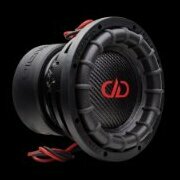
Good day everyone, I currently have a Fi 3.9 Neo Dual 1.4 ohm subwoofer, which is recommended to run in an enclosure between 1.8–2.5 cu ft. The amplifier I have available is a 8k. Taking impedance rise into account, I expect to see roughly 4000W RMS in actual output. I’m trying to determine the most suitable enclosure volume for my setup. I don’t plan on playing rebassed music, my listening is mainly hip hop, techno, pop, reggae, etc. and I’m aiming for a tuning frequency of around 36 Hz. I understand that with the power level I’m working with, the port will need to be quite large to avoid chuffing around 27 per cube, but I’d really appreciate guidance on what enclosure volume within the recommended range would give the best overall performance for my use case. Thanks in advance for any advice!