
MECHMAN
-
Posts
3018 -
Joined
-
Last visited
-
Days Won
6
Content Type
Profiles
Forums
Events
Media Demo
Store
Collections
Videos
Everything posted by MECHMAN
-
Alright guys, after a HUUUUGE hiatus, we're back to being active. Sooooo many new things going on, all good and expanding and getting better.
I'm usually on F-book/Insta but will add this to mix. Or, just email [email protected]
I'll do what I can to help.


-
-
 2
2
-
- Report
-
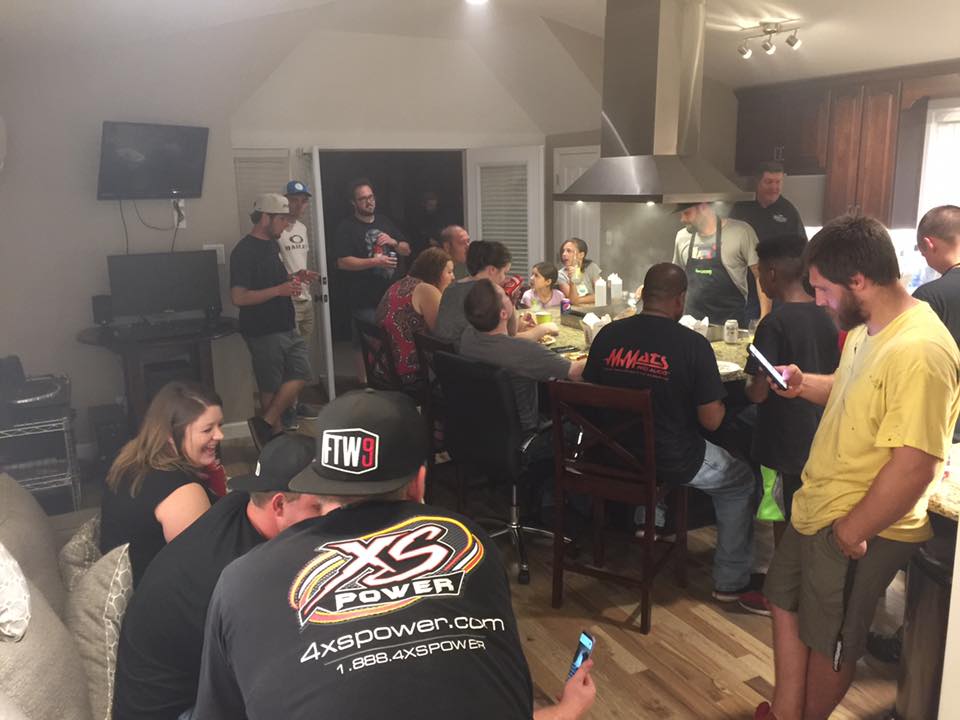
Our Owner Matt personally cooking for some of the early guests from this past summers Mechman / XS Power Show in Knoxville TN. Experience the Mechman difference! http://www.Mechman.com

-

Upgrade Big 3, Alternator, Battery?
MECHMAN replied to xBevy's topic in Electrical-battery- Alternators- Wiring
With regards to your upgrade, there are different ways to look at it. Proper wiring is important to ensure that your electrical system will charge properly and, most importantly, safely. We have had situations in the past where people neglect to upgrade their connection cables and with a HO alternator in place of the old OEM, this could possibly lead to melted cables, damaged batteries, and fire. So, when planning your set up, you have to consider 1. how much power you need to handle 2. how many watts your battery will support as a primary or secondary source and 3. how many amperes are needed to handle that load. Our alternators come in different amperages and are designed to work with large audio systems and vehicle accesory set ups. For your 1999 Oldsmobile Alero, we offer a 270 amp alternator as well as a 320 amp model. With any alternator that produces 220 amps or more we recommend using zero gauge (1/0) cable. We do utilize our resources at XS Power for cable and batteries. They are reliable and last long. If you have any other specific questions, please do not hesitate to message us here or you can reach me directly at [email protected]. Thanks. -
Alternator Fusing
MECHMAN replied to fosgatefan821's topic in Electrical-battery- Alternators- Wiring
Your fuse should always be greater than your max amperage. Our Mechman alternators are underrated, so if you had one of our 270amp alternators you would need close to a 300 amp fuse. A little cushion goes a long way in preserving your electrical system and stereo components / accessories. I hope this helps. Michael [email protected] -
How much power do I need?
MECHMAN replied to dbslayerdrake's topic in Electrical-battery- Alternators- Wiring
Depends on how many batteries you are going to run. What kind of vehicle is it going in? Sometimes you are limited on alternator amperage depending on how much room there is in the engine compartment, or what type of belt is used to drive the alternator. If it only has a 4 groove or v belt driving the alternator, you are going to be limited to 150-200 amps, and will just have to run more batteries. -
We get asked this question all the time, so I thought I would post it here for general info. Here is the question we got from someone: Dear mechmanalternators, Can you please explain to me what six phase means & whats the job of the rectifiers? Im a lil new to this & trying to get as much info as I can...I would like to go with yall as my company ive seen alot of great things from yall & well respected people have chosen yall over the rest like steve meade so that says alot about your company & products in my book. Our response: A standard alternator is generally 3 phase. This means that there are three “legs” of the stator that fire in succession as the alternator spins, A-B-C-A-B-C-A-B-C producing alternating current. 6 phase alternators have two 3 phase stators inside the alternator that are slightly out of phase of one another. The two stators fire in succession like this: A-a-B-b-C-c (the second stator is in lower case) Because they are slightly out of phase with one another, there is a cancellation of electromagnetic harmonics that makes the alternator run more smoothly and more efficiently. This allows for cooler operation, more output from a smaller overall housing, and MUCH better durability. The rectifiers turns the AC current coming out of the stator into DC current. DC current is what is used in an automobile. By passing trough the diodes, half of the AC current is burned off in the form of heat as it is “rectified” into DC current. That heat is what eventually kills alternators. By having (2) rectifier plates, there is much more surface area to dissipate the heat. This is especially important in a high output alternator- as the more amperage the alternator makes, the more heat is generated. Also, by having (12) or (16) diodes (depending on which 6 phase alternator you are talking about) instead of just (6) or ( diodes in a 3 phase alternator, the heat and electrical load can be distributed more evenly throughout the rear of the alternator housing. Hope that info is useful. Matthew Young (865)522-6166 ext 204 [email protected]
-
You can also install a power programmer to increase your engine idle speed to 800 rpm. They give you more horsepower and better gas mileage as well. Going to an 800 rpm idle speed usually boosts idle output by 20% - 30%
-
could this cause a problem
MECHMAN replied to Fosgatefeind's topic in Electrical-battery- Alternators- Wiring
14 volt batteries are the way to go. They need to be charged at 16.5 -16.8 volts, which typically will work with most vehicle's stock electrical. There is no efficient way to use "step up" transformers to run a dual voltage setup. If I were you, I would just run all D1400 batteries in the vehicle, and install our AVBM module to increase the charging voltage of the stinger alternator to the necessary 16.5 - 16.8 volts. 16 volt batteries need to be charged at 18.9 - 19.2 volts to be properly charged- that is way to high for your vehicle, and even most amps. -
How to keep alternator cool?
MECHMAN replied to SnowDrifter's topic in Electrical-battery- Alternators- Wiring
That alternator already has twin internal fans. The best way to make it run cooler would be to cut a hole in the hood with a scoop to provide fresh air, or to possible make a duct to go from the front of the vehicle to the rear of the alternator were it takes in air to cool the rectifier. -
If you want a digital the AutoMeter digital voltmeter works great. It's not cheap, $80, but looks great and is accurate.
-
Better to keep thinking and learning, I learn something new here every day about automotive electrical.
-
Stock Alternator Not Enough For Upgrade?
MECHMAN replied to Mikey Bates's topic in Electrical-battery- Alternators- Wiring
Yes, run the 1/0 now if you are planning for the future. That prevents you from paying for everything twice and doing the work twice. It will cost a little more now but the end result will be better for you. -
Is my wiring correct
MECHMAN replied to HunterJohnson's topic in Electrical-battery- Alternators- Wiring
Fuses! The safest way to do this is to fuse the charge cable from the alternator to the battery as close to the battery as possible, all power cables going to secondary batteries close to the primary battery and secondary battery, and your amps. That way if any power cable grounds out you just need to fix the cable and replace fuses, not call the fire department and replace your ride. Some people think that they will gain DB's going with no fuses, this is false if you can provide the same current to the batteries and amps, so be sure you have adequate cable size and numbers to provide the amperage you require for best performance. -
That´s exactly my thoughts!!! Using this same topic i do have a question for you, i have 2 runs of positive and negative wires, what about if i use one positive from my mechman alt to the primary battery and use the other one from the alt directly to the amplifier? just a dumb question lol I do not recommend connecting directly to the amp from the alternator, NO gain will be seen. There is far more instant power available from the batteries than the alternator, the response time of the alternator will slow power delivery and it can add unnecessary strain to the alternator. It's best to connect the alternator direct to the primary battery, then branch out from there.
-
Stock Alternator Not Enough For Upgrade?
MECHMAN replied to Mikey Bates's topic in Electrical-battery- Alternators- Wiring
Just trying to share the knowledge gained from experience. While I am in the business of selling high output alternators they are not always the solution to the problem. If I sell an alternator for hundreds of dollars and it doesn't solve the original complaint I would look like a jerk, have an unhappy customer and damage our reputation. The OP needs to upgrade some cables and install a better battery, then adjust the gains properly and I think he will be fine with his system for now. In the future if he needs a high output unit we will be able to set him up properly. -
ireggi alternators
MECHMAN replied to Crazycaraudio's topic in Electrical-battery- Alternators- Wiring
You don't want a 4-pin unit for your 09 Tahoe. It's got PCM controlled voltage, that regulator is not compatible. Also be sure you look at how the wiring must be run on that vehicle, additional grounds, secondary batteries and other connections may cause serious voltage fluctuations and improper alternator function. -
Connect your alternator charge and ground directly to the primary battery under the hood. Then connect your amp power or secondary battery to the primary battery. I prefer to run charge and ground cables directly to insure the best possible ground.
-
I would recommend grounding the alternator directly to the battery negative. This gives you the best charging performance.
-
Use the mounting bolt as recommended above for your ground. Some alternators we build will have a ground stud installed, some will not, it depends on the design. On your application we would not be able to include the ground stud due to the design of the alternator case. The ground we recommend for your alternator is directly to the battery negative.
-
Is my wiring correct
MECHMAN replied to HunterJohnson's topic in Electrical-battery- Alternators- Wiring
Add a ground from your alternator directly to the battery negative under the hood. -
Stock Alternator Not Enough For Upgrade?
MECHMAN replied to Mikey Bates's topic in Electrical-battery- Alternators- Wiring
The first thing for you to do with your current 800w setup would be to run a 1/0 charge and ground cable directly from the alternator to the positive and negative post of the battery. Don't ground the alternator to the engine or frame, ground it straight to the battery. Ground your battery to the chassis using 1/0 too. Then get a good battery in there, something like an XS Power D3400 or D6500. This should help with the current setup you have and will be necessary with your increased output in the future. Also set your gains properly, ANY clipping will increase the dimming issues substantially. And once you have the battery and cable installed and the gains set properly if you still have dimming issues you will need a high output alternator. -
Your best method of providing the cleanest power to your amps is to ground your amps directly to the battery, ground all the batteries to battery direcly and avoid the frame. Same applies to grounding the alternator directly to the battery negative, provides a lower resistance ground and better charging performance. Path of least resistance is what you are looking for here. I personally run my amp grounded directly to my second battery, and that battery connected both positive and negative to the primary battery under the hood. This is connected to the alternator with cables running direct from the output and ground stud to the battery positive and negative. This has provided me with the best voltage reading to the secondary battery and amplifier. Most people will be fine grounded to the frame, but when you are looking for every 10th of a volt for an SPL vehicle routing your grounds directly to the battery can make all the difference.
-
Many of the new testers will fail a unit if the voltage is outside OEM spec, meaning that if your aftermarket regulator charges at 15.2v cold and settles to 14.8v hot that it may show a regualtor failure if the spec allows for a max of 14.6v. Most of the aftermarket test equipment can only pull about 200a from their load bank or their meter won't read high enough to show true output. While you may not see the full output on a test bench that does not have the full load capability. Remember that the amperage output will not reduce unless there is a failed part such as a diode or worn brushes. I'm keeping this very general, this is more complicated than I am explaining it here, but the general information is really what will serve you best in testing your unit. There are exceptions to this, but if you have your system connected in your vehicle you only need a couple tools to test your alternator charging output yourself. The DC amp clamp isn't cheap, so you might want to borrow one, but any audio enthusiast should have a quality voltmeter. Using your system in place of a load bank may not max out your alternator output, but you will be able to see the output that it is producing, and using the voltmeter you can monitor voltage to determine if there is in fact an alternator problem. We have a 400a load bank in our shop that we use on our test bench and a 400a amp clamp to read accurate amperage output. If anyone needs a unit tested we can do this for you. You pay the shipping and I will test the output of your high output alternator if you can't get it done locally.
-
Having a hard time finding a H/O Alt.
MECHMAN replied to Papaslim's topic in Electrical-battery- Alternators- Wiring
We build Jeep units all the time, got a couple on order right now. All of our friends here run them in their Jeeps. I could have one built and shipped in a couple days for your application. -
As already stated, not all of our units are listed on the site. With 1000+ part numbers it would take a very long time to load them all between sales and tech calls, so we just hit the big numbers. Email me your full vehicle info and I will tell you what we can do for you.
.png.33836016fe20698fc38046e6d46b4884.png)